23. August 2026
What holds back the next tango generation
Pekka
You are reading an automatic translation. Original language: Deutsch.
At the end of the last post on Lebenswandel im Tango, I argued: Tango was already on the decline in (Western) Europe before Corona, there is a lack of new talent in Münster, and it's up to us to change that. I blamed the decline of Tango Nuevo on the one hand and mentioned some external factors such as digitalization, home office, social media, and AI.
I am currently on vacation and couldn't go to a Milonga yesterday Saturday evening, so I consulted relevant databases and Google Scholar to better understand the reasons for Tango's decline. I find it highly interesting how diverse the possible explanations are, and I present here to the blog's readership (according to usage data, about 3 people 😂) my collected findings from last night. This gives us a correspondingly broad repertoire of instruments for how we could address the changing times in Tango. But this text is only about the causes for now.
1. “Digitalization 1”: Personal interaction has shifted to digital, and loneliness is increasing
The research team around US psychologist Jean Twenge has shown the same pattern in three major works. In representative samples of around 8.2 million young people (1976–2017), the generation of the 2010s spent significantly less time on exactly the things Tango thrives on: meeting up, going out, going to parties, and socializing — even though neither homework nor gainful employment increased (Twenge, Spitzberg & Campbell, 2019). According to US time-use data, 15 to 25-year-olds alone lost about 140 hours of personal social time per year (Twenge & Spitzberg, 2020). Parallel to this retreat, loneliness among young people rose sharply after 2012, simultaneously in 37 countries, in lockstep with the spread of smartphones and the internet (Twenge et al., 2021). In short: personal interaction is decreasing, digital use is increasing, and loneliness is growing.
2. Retreat into one's own four walls
A study from transportation and planning research (Morris, Speroni & Taylor, 2024) analyzed US time-use data from 2003 to 2023. We (I take the liberty of generalizing) are increasingly staying at home: between 2003 and 2019, time spent outside the home steadily decreased by almost half an hour per day. Corona accelerated this. During the pandemic, time outside the home sharply decreased (from 332 to 270 minutes per day), and it barely recovered afterwards (only +6 to +8 minutes between 2021 and 2023). The authors suspect information technology (smartphones, streaming, online shopping, home office, digital entertainment) as drivers.
3. No more place to go — the vanishing of “third places”
Sociologist Ray Oldenburg called them “third places”: the casual places between home (the first place) and work (the second), where community spontaneously arises — cafes, clubs, libraries, squares (Oldenburg, 1989). A Milonga is essentially such a third place. Newer research refers to such places as “social infrastructure”, meaning the physical prerequisite for social connection to arise at all (Latham & Layton, 2019). Where these places disappear — displaced by privatized, consumption-centric spaces — the protective factors against loneliness and retreat are missing. Fewer third places means: fewer opportunities to casually interact with each other or to stumble into a scene (just as I stumbled into Tango rather by chance back then). For Münster, Christian Vaccaro from Tango Pasión has documented in personal research how dance schools are being pushed out of the inner city area (and generally).
4. From associations to individuals: “light sport”
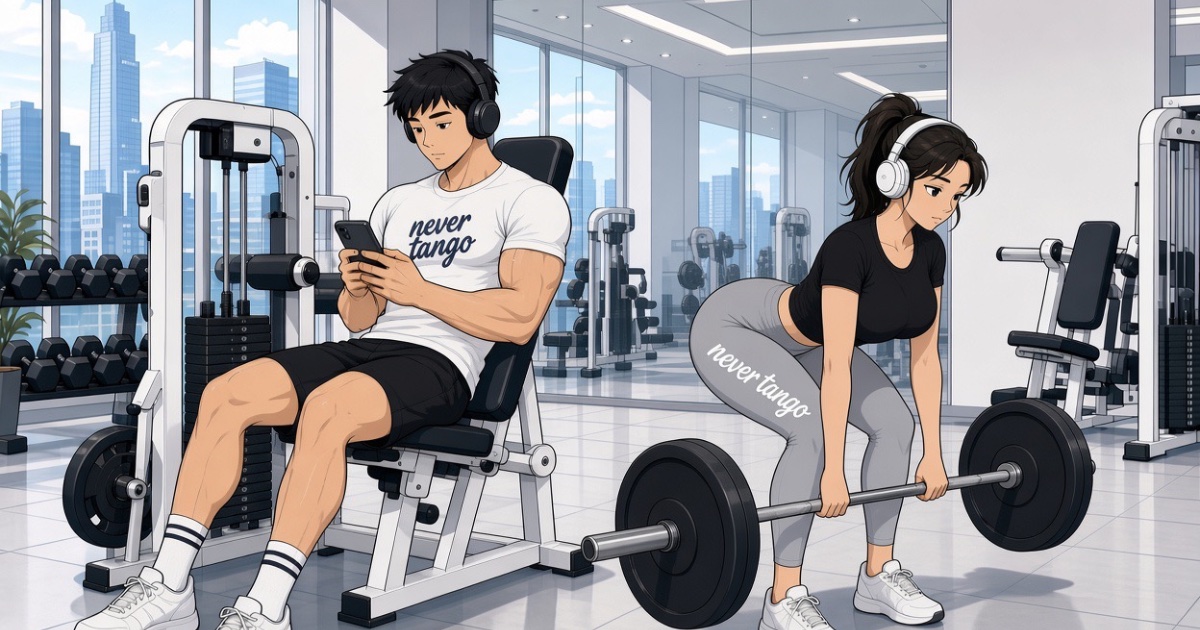
Over the last 20–30 years, participation in fixed, club-bound, binding activities (“heavy” forms of sport) has declined in favor of flexible, informal, always-doable (“light”) forms: winners include running, fitness studios, sport in public spaces and at home (Borgers et al., 2016). For Germany, Klostermann & Nagel (2014) showed this: Over decades, individual sports grew at the expense of club and team forms. The core finding: people increasingly want to decide for themselves when and how often they do something, without membership, fixed appointments, and partner dependency. The reason found by research is interesting: Those who go to the gym (more and more people) are more motivated by health and appearance; those who join a club (fewer and fewer people) are more motivated by sociability.
5. Demographics: Tangueros are dying out
Sportentwicklungsbericht by Breuer & Haase (2006): Of the 90,000 German sports clubs, 40,000 see themselves negatively affected by demographic change; 1,500 of them are threatened in their existence. Behind this is primarily the decline in the number of children and young people (birth rate below 1.4 instead of the 2.1 needed for population maintenance) and the aging of society. More interesting: The more a club underestimated the decline in children and young people, the greater its problems in attracting new members. Conversely, clubs that reacted actively (advertising, new offers, cooperations) were able to significantly reduce their recruitment and retention problems. A distinction must be made regarding structural change: Demographic factors are more acutely noticeable in Western Europe and especially Germany than in the United States!
6. Money and access: a real hurdle
Several studies show that economic and social access barriers particularly affect young people. In a survey of about 1,000 young people, those from lower-income families cited the biggest hurdles as: costs, transport — and not feeling welcome (Tandon et al., 2021). In addition, organized activities are increasingly perceived as “less enjoyable compared to other activities” and as financially/logistically demanding (Knoester & Bjork, 2024). For an age when education, insecure jobs, and high living costs coincide, this is not a marginal issue.
7. Less body awareness: motoric prerequisites are decreasing
Dancing requires a minimum level of body control — and that is declining. A systematic review over the years 1972–2015 shows a clear negative long-term trend in endurance (Füner et al., 2021). Even more directly: Using the Koordinationstest für Kinder (KTK), which has been established in Europe for decades, today's children perform significantly worse than their peers from the 1970s — the authors of a large study speak of a “worrying downward trend” in gross motor skills (Giuriato et al., 2021), confirmed by further studies. The main causes are considered to be more sitting and screen time. For a coordinatively demanding dance, this could mean: The entry barrier is higher than before.
8. Less music in the ear: the musical basis is narrowing
Tango lives from its music — and precisely this access to music in Germany is shrinking. (Lehmann-Wermser, Konrad & Weishaupt, 2020): Only about 43% of the prescribed primary school music lessons are taught by qualified specialists (trending downwards); the rest is taught by non-specialists — between 26% and 81% depending on the federal state — or cancelled entirely. By 2028, an estimated 23,000 to 25,000 trained primary school music teachers will be missing. In 2024, the Verband deutscher Musikschulen and the Bundesverband Musikunterricht warned in their joint “Leipziger Erklärung” about the decline in early musical education opportunities and long waiting lists at music schools (BMU & VdM, 2024). The same picture internationally: In Great Britain, extracurricular music-making declined (UK Music / britisches Parlament, 2018).
9. What role models/influencers present today
The role models young people look up to are now found on social media. A systematic review (Grimminger-Seidensticker & Korte, 2026) shows: 37–56% of young people actively engage with “Fitspiration” content. This caters to the desire for low-threshold, immediately achievable participation, creates a sense of connection, and provides role models — but strongly leads to idealized body images and the desire for quick solutions. In short: The digital role model ecosystem primarily promotes individual, appearance-oriented, quickly available movement.
10. The agony of choice paralyzes commitment
A psychological perspective: The more options, the harder it is to commit. The classic “jam experiment” showed that a sales stand with 24 varieties led to significantly fewer purchases than one with only 6 (Iyengar & Lepper, 2000); Barry Schwartz later called this phenomenon the “Paradox of Choice”. A large meta-analysis provides the important nuance: The effect is real, but context-dependent — strongest when options seem similar, the stakes appear high, and one has no prior knowledge (Chernev, Böckenholt & Goodman, 2015). This describes quite precisely a young person facing an endless menu of leisure activities, without experience in any of them: The more likely reaction is not to commit at all — especially not to something as binding and slow to learn as Tango.
11. The experience society: Consumption instead of practice
Sociologist Gerhard Schulze already described the “Erlebnisgesellschaft” (experience society) in 1992 — a culture in which it's less about sustained practice and more about short, consumable, shareable experiences. In this logic, Tango has a hard time: It doesn't reward immediately, but only after months; it is practice, not consumption; and it is difficult to “experience” and repost in thirty seconds.
12. Fewer couples, less physical intimacy
A perspective that particularly affects a partner dance: Young people today enter into relationships less often and seek physical intimacy less often. Sexual inactivity among young adults increased across birth cohorts (Twenge, Sherman & Wells, 2017); the frequency of sexual activity declined over two decades, most sharply among young adults (Ueda et al., 2020). An analysis that explains the decline multifactorially is particularly valuable (South & Lei, 2021): It examines eight causes simultaneously — employment situation, debt, living longer with parents, electronic media, television, computer games, alcohol. And a longitudinal study shows the mechanism behind it: Socially withdrawn young adults enter relationships later or not at all because they lack the developmental stages from friendship to mixed groups to partnership (Barzeva et al., 2021). The social, “mixed” practice fields where people used to meet others — the Milonga would be one of them — are visited less often.
A weak counter-argument: Perhaps not decay, but redistribution
Finally, a finding that is intended to consciously contradict me. A study using US data (2008–2013) finds no clear decline in communal “social capital” (Weiss et al., 2018). And from sports research comes the indication that much of what looks like “discontinuation” is in reality a shift: away from organized, towards informal, self-organized forms (Battaglia, Kerr & Tamminen, 2024). I believe that during this period (2008–2013), the observed trends were simply not yet as strong. The productive interpretation is: People may not have disappeared, they have gone somewhere else. Then the question is less “Why don't they come?” than “Where have they gone?”
Conclusions for Tango
Taken together, these perspectives yield a series of conclusions — not yet solutions, but starting points that can then serve as a basis for a next part:
- Tango is a powerful antidote to loneliness. Exactly where research measures the greatest loss — personal closeness, genuine togetherness — lies Tango's true strength.
- Tango must provide a reason to leave the house — and thereby compete with the convenience of the digital, which has demonstrably won.
- The Milonga is a “third place” — its loss weakens society, makes us less resilient (among other things, more susceptible to propaganda), and its preservation strengthens us socially as a whole and individually as human beings.
- Tango offers what individual fitness cannot: genuine human connection and partnership instead of self-optimization in front of a mirror. At the same time, it must learn to make itself accessible in new ways.
- We must not underestimate the pressure of shrinkage — the most important finding from demographics is that passivity is punished and active engagement is rewarded.
- Costs and access are a real hurdle for young target groups — they must be addressed.
- The physical entry must be low-threshold — if motor skills requirements decrease, the beginning cannot overwhelm with high demands. At the same time, Tango offers the opportunity to catch up on “missed” things here.
- Music is a core promise that must be conveyed, not assumed — precisely because many today grow up without basic musical education, Tango can even be a gateway (back) to music.
- Tango needs visible, authentic, approachable role models in exactly the channels where young people seek their role models.
- Against the agony of choice: entry must be possible without a large investment and with simple conditions.
- Experience logic: create small successes early — instead of referring to distant proficiency in many months.
- Tango offers structured, safe physical intimacy — in a time when relationships and touch are becoming rarer, this is a deep, underestimated need.
- We should ask where potential newcomers have gone — and meet them there and in a form that suits their current lives.
Conclusion
The lack of young talent in Tango is not a failure of Tango itself and not a consequence of Corona. It is the local manifestation of a much larger pattern: Young people are less outdoors, less among people, less in committed groups, grow up less often with music and physical control, find fewer places to go, fewer occasions for intimacy — and more reasons not to commit at all. But in almost every one of these perspectives, there is also a hint of what Tango can do better than the offerings that draw people away from it: genuine connection instead of a screen, a place instead of the couch, intimacy instead of isolation, music and body instead of consumption. The demographic finding soberly reminds us that nothing comes back on its own — but also that active engagement measurably helps.
Sources
Twenge, J. M., Spitzberg, B. H. & Campbell, W. K. (2019). Less in-person social interaction with peers among U.S. adolescents in the 21st century and links to loneliness. Journal of Social and Personal Relationships, 36(6), 1892–1913.
https://journals.sagepub.com/doi/10.1177/0265407519836170
Twenge, J. M. & Spitzberg, B. H. (2020). Declines in non-digital social interaction among Americans, 2003–2017. Journal of Applied Social Psychology, 50(6), 363–367.
https://onlinelibrary.wiley.com/doi/abs/10.1111/jasp.12665
Twenge, J. M., Haidt, J., Blake, A. B., McAllister, C., Lemon, H. & Le Roy, A. (2021). Worldwide increases in adolescent loneliness. Journal of Adolescence, 93, 257–269.
https://www.sciencedirect.com/science/article/pii/S0140197121000853
Morris, E. A., Speroni, S. & Taylor, B. D. (2024). Going nowhere faster: Did the COVID-19 pandemic accelerate the trend toward staying home? Journal of the American Planning Association.
https://www.tandfonline.com/doi/full/10.1080/01944363.2024.2385327
Oldenburg, R. (1989). The Great Good Place. New York: Marlowe & Company. (Grundlagenbuch)
Latham, A. & Layton, J. (2019). Social infrastructure and the public life of cities. Geography Compass, 13(7), e12444.
https://doi.org/10.1111/gec3.12444
Borgers, J., Breedveld, K., Tiessen-Raaphorst, A., Thibaut, E., Vandermeerschen, H., Vos, S. & Scheerder, J. (2016). A study on the frequency of participation and time spent on sport in different organisational settings. European Sport Management Quarterly, 16(5).
https://www.tandfonline.com/doi/abs/10.1080/16184742.2016.1196717
Klostermann, C. & Nagel, S. (2014). Changes in German sport participation: Historical trends in individual sports. International Review for the Sociology of Sport, 49(5), 609–634.
https://journals.sagepub.com/doi/10.1177/1012690212464699
Breuer, C. & Haase, A. (2006). Sportvereine und demografischer Wandel (Sportentwicklungsbericht 2005/2006). Deutscher Olympischer Sportbund / Deutsche Sporthochschule Köln.
Tandon, P. S., Kroshus, E., Olsen, K., Garrett, K., Qu, P. & McCleery, J. (2021). Socioeconomic Inequities in Youth Participation in Physical Activity and Sports. International Journal of Environmental Research and Public Health, 18(13), 6946.
https://www.mdpi.com/1660-4601/18/13/6946
Knoester, C. & Bjork, C. (2024). U.S. youth sports participation: Analyzing the implications of generation, gender, race/ethnicity, socioeconomic status, and family and community sport cultures. Leisure/Loisir, 48(4), 797–843.
https://www.tandfonline.com/doi/full/10.1080/14927713.2024.2366177
Fühner, T., Kliegl, R., Arntz, F., Kriemler, S. & Granacher, U. (2021). An Update on Secular Trends in Physical Fitness of Children and Adolescents from 1972 to 2015. Sports Medicine, 51, 303–320.
https://www.ncbi.nlm.nih.gov/pmc/articles/PMC7846517/
Giuriato, M., Biino, V., Bellafiore, M., Battaglia, G., Palma, A., Baldari, C., Guidetti, L., Gallotta, M. C., Schena, F. & Lanza, M. (2021). Gross Motor Coordination: We Have a Problem! A Study With the Körperkoordinations Test für Kinder in Youth (6–13 Years). Frontiers in Pediatrics, 9, 785990.
https://www.frontiersin.org/journals/pediatrics/articles/10.3389/fped.2021.785990/full
Lehmann-Wermser, A., Konrad, U. & Weishaupt, H. (2020). Musikunterricht in der Grundschule. Bertelsmann Stiftung / Deutscher Musikrat / Konferenz der Landesmusikräte.
Bundesverband Musikunterricht (BMU) & Verband deutscher Musikschulen (VdM) (2024). Leipziger Erklärung zur Stärkung musikpädagogischer Berufe (12.01.2024).
UK Music / British Parliament (2018). Schools: Music Education (Hansard, House of Lords, 18.10.2018). (parliamentary data)
Ruth, N. & Müllensiefen, D. (2021). Survival of musical activities. When do young people stop making music? PLOS One, 16(11), e0259105.
https://journals.plos.org/plosone/article?id=10.1371/journal.pone.0259105
Grimminger-Seidensticker, E. & Korte, J. (2026). Adolescents’ engagement with #fitspiration content — a systematic review of qualitative and quantitative studies and pedagogical implications for physical education. German Journal of Exercise and Sport Research.
https://link.springer.com/article/10.1007/s12662-026-01107-7
Iyengar, S. S. & Lepper, M. R. (2000). When Choice is Demotivating: Can One Desire Too Much of a Good Thing? Journal of Personality and Social Psychology, 79(6), 995–1006.
https://doi.org/10.1037/0022-3514.79.6.995
Schwartz, B. (2004). The Paradox of Choice: Why More Is Less. New York: Ecco/HarperCollins. (Basic book)
Chernev, A., Böckenholt, U. & Goodman, J. (2015). Choice overload: A conceptual review and meta-analysis. Journal of Consumer Psychology, 25(2), 333–358.
https://doi.org/10.1016/j.jcps.2014.08.002
Schulze, G. (1992). Die Erlebnisgesellschaft. Kultursoziologie der Gegenwart. Frankfurt/New York: Campus. (Seminal work)
Twenge, J. M., Sherman, R. A. & Wells, B. E. (2017). Sexual Inactivity During Young Adulthood Is More Common Among U.S. Millennials and iGen. Archives of Sexual Behavior, 46(2), 433–440.
https://doi.org/10.1007/s10508-016-0798-z
Ueda, P., Mercer, C. H., Ghaznavi, C. & Herbenick, D. (2020). Trends in Frequency of Sexual Activity and Number of Sexual Partners Among Adults Aged 18 to 44 Years in the US, 2000–2018. JAMA Network Open, 3(6), e203833.
https://jamanetwork.com/journals/jamanetworkopen/fullarticle/2767066
South, S. J. & Lei, L. (2021). Why Are Fewer Young Adults Having Casual Sex? Socius, 7.
https://journals.sagepub.com/doi/10.1177/2378023121996854
Barzeva, S. A., Richards, J. S., Meeus, W. H. J. & Oldehinkel, A. J. (2021). Social Withdrawal and Romantic Relationships: A Longitudinal Study in Early Adulthood. Journal of Youth and Adolescence, 50(9), 1766–1781.
https://link.springer.com/article/10.1007/s10964-021-01469-1
Weiss, I., Paxton, P., Velasco, K. & Ressler, R. W. (2018). Revisiting Declines in Social Capital: Evidence from a New Measure. Social Indicators Research, 142(3), 1015–1029.
https://link.springer.com/article/10.1007/s11205-018-1956-6
Battaglia, A., Kerr, G. & Tamminen, K. (2024). The Dropout From Youth Sport Crisis: Not as Simple as It Appears. Kinesiology Review, 13(3), 345–356.
https://journals.humankinetics.com/view/journals/krj/13/3/article-p345.xml
Hinweis: Die Bilder in diesem Beitrag wurden mit KI erstellt.
Instagram unterstützt keine direkten Web-Shares — bitte Link kopieren und in Story oder DM einfügen.
Kommentare
Lädt…