28. August 2026
Gricel, Part 1: The Love Story

Pekka
You are reading an automatic translation. Original language: Deutsch.
“Mi Noche Triste”: In 1917, this song founded an entire genre: Tango Canción – sung tango. From then on, tango was to be sung if it wasn't played for dancing couples. The singer of that 1917 recording was Carlos Gardel, and he began a meteoric rise to become the star singer of South America. His voice, his presence, and his emotion defined what Tango was and still is. Contemporaries and subsequent generations referred to him as the original, including, for example, Troilo, Di Sarli, or Ángel Vargas. And Gardel's “partner” at the beginning of this success story, the poet and co-founder of this art, was Pascual Contursi. He had a son, José Maria Contursi, who inherited from his father the interest in Tango, its poetry, and the art of writing, as well as the flair for drama in Mi Noche Triste (lament for a lost love). When Mi Noche Triste was created, José Maria was just 5 years old. So, let’s remember the little one and move three more years into the future from 1917.
Here we meet Susana Gricel Viganó, born on April 15, 1920, in San Cristóbal, Buenos Aires. In Buenos Aires, she also meets her childhood friends Nelly and Gory Omar. Later, she moves with her parents to Capilla del Monte in the Sierras de Córdoba, where they run a hotel, and Gricel wins several beauty pageants as a teenager. Nelly and Gory have become singers, and Nelly finds success in Tango. For an audition on the radio, they invite the 15-year-old Gricel to Buenos Aires.
1935. The now 24-year-old José María Contursi works as a locutor (announcer) at Radio Stentor. He is married and has a small daughter. However, that doesn’t stop him from enjoying his life as an important Tango personality and bohemian. He has numerous love affairs, so there should be muses in abundance. But he hasn’t yet achieved his poetic breakthrough.
Now, the singers Nelly and Gory Omar visit the studio for their audition – and bring their friend Gricel from Córdoba with them. For Contursi, it’s a “Flechazo,” love at first sight.
He and Gricel also spend several days and weeks together, strolling, dining… and Gricel begins to develop affectionate feelings. But she can’t stay in Buenos Aires forever, and her parents are absolutely against this inappropriate pastime for their 15-year-old daughter. In the end, Gricel returns, and Contursi remains in Buenos Aires.
Three years pass, and the two don’t completely forget each other. Gricel continues to win local beauty pageants; Contursi still hasn't achieved his breakthrough.
In 1938, due to an illness, Contursi is advised by a doctor to go to the high altitudes of Córdoba. By a sure twist of fate, he books a room in Capilla del Monte at Gricel’s family's hotel. The two continue to stroll and dine uninhibitedly, and the encounter turns into an even greater love.
Contursi's “jaunars” (jaundice) illness with the Gricel cure repeats itself twice more: in 1939 and 1940. At this point, Gricel's parents finally put a stop to it, or Contursi decides to return to his wife and growing family and no longer travel to Capilla (or the doctor no longer cooperates… we don't know exactly).
But now it begins: From Buenos Aires, Contursi sends letters full of sadness. From Capilla del Monte, Gricel responds rather dryly and reservedly. Contursi continues to process his suffering poetically for Tango lyrics. The first of these “Gricel Tangos,” “En Esta Tarde Gris,” emerges in 1941. Contursi takes the lyrics to Mariano Mores, who composes the music. The recording by Troilo with Fiorentino is particularly well-received (this “Gricel Tango” thus precedes the turning point of the piece “Malena” in early 1942 and exhibits the appropriate rhythmicity). And then, towards the end of 1942, “Gricel” is also recorded by Troilo with Fiorentino, and it becomes an absolute hit. Gricel is approached in the village, being told it’s her in the song. But in Buenos Aires, at Contursi’s home, the secret remains well-kept. People believe in a fictional love story that inspired the hit.
The story has a continuation that you couldn't make up. Contursi becomes a widower around 1960 and sinks into alcoholism in the famous Confitería del Molino in Buenos Aires. Gricel, by then abandoned by her own husband, learns of Contursi's condition in 1962 through the bandoneonist Ciriaco Ortiz – and takes the bus to Buenos Aires.
In 1967, they marry in a church in Capilla del Monte. He is 56, she is 47. Upon their reunion, Contursi writes another Tango: Otra vez Gricel. Their marital bliss lasts just under five years – Contursi dies on May 11, 1972. Gricel outlives him by over two decades, dying on July 25, 1994.
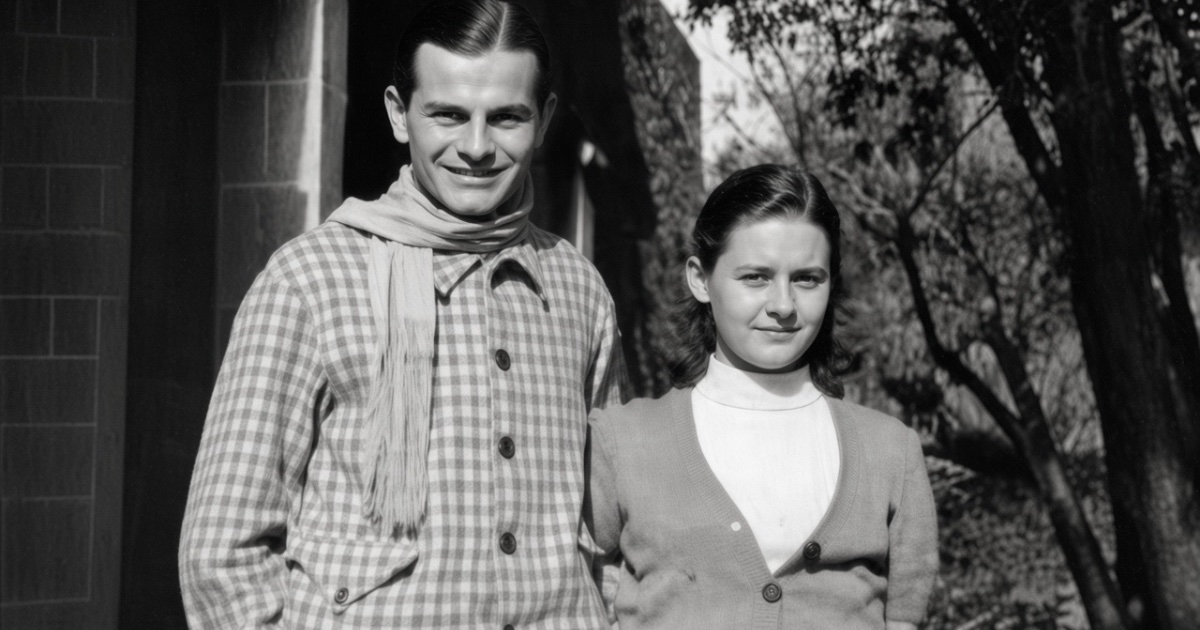
The image above is a historical photo of Contursi and Gricel in Córdoba, “sharpened” by AI.
Mi noche triste:
https://open.spotify.com/track/3JtdYrnfJda8dIiZ6RAfGy?si=UwGuLY8QQKiL3c41pPGOlQ&utm_source=copy-link
En esta tarde gris:
https://open.spotify.com/track/4sYO3DKxEhUdcXoSsQ5mLf?si=6IapEHWPRUuA0ylGVz93Jg&utm_source=copy-link
Gricel:
https://open.spotify.com/track/1RnaSu1V2YnF1K1HW8jXwf?si=C3B4GIrETJKeZpIiY3bTPA&utm_source=copy-link
Hinweis: Die Bilder in diesem Beitrag wurden mit KI erstellt.
Instagram unterstützt keine direkten Web-Shares — bitte Link kopieren und in Story oder DM einfügen.
Kommentare
Lädt…