28. August 2026
Thoughts on Pauses and Stillness in Tango
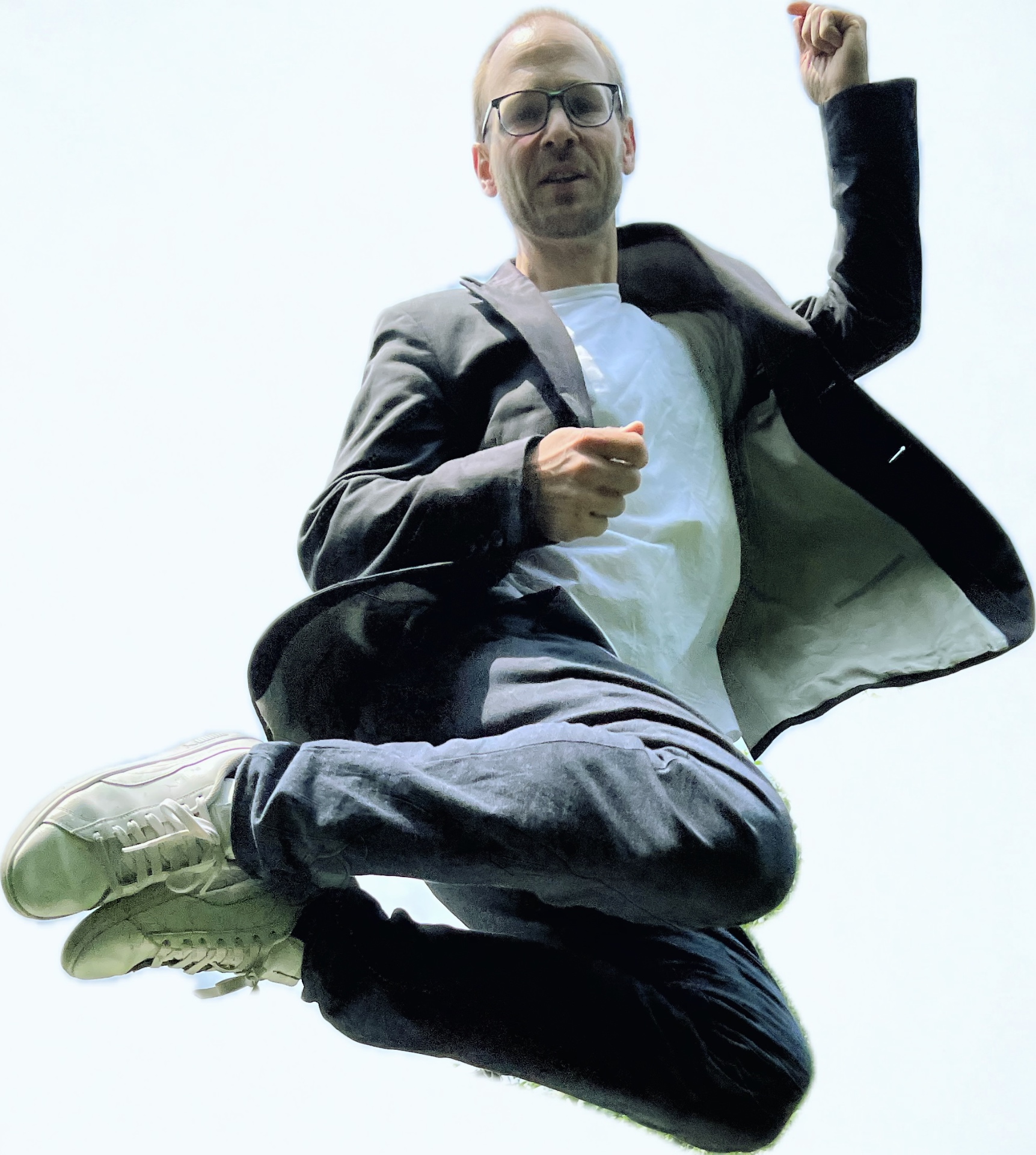
Pekka

The Pause
Carlos Gavito: "The secret of tango is in this moment of improvisation that happens between step and step. It is to make the impossible thing possible: to dance silence. This is essential to learn in tango dance, the real dance, that of the silence, of following the melody."
Against our programming
It feels like the most natural thing in the world, and it is exactly the thing tango asks you to unlearn: This automatism that when there is music playing, you have to move. Learning to not step on a beat that is clearly available to you is one of the hardest reversals in the dance, because it runs against an urge that is wired pretty deep into some motor control circuitry.
A pause is not an absence. It is a charged, full moment in the dance. The only thing absent is movement, not the content of the movement. How can you tell? By observing motion. The movement that‘s absent is „macro“-movement. The content that is present is visible in „micro“-movements. By micro-movements I mean movements that are by definition small, tend to happen more in the upper body/embrace, and are often not a transfer of weight.
Imagine the couple as a vase, and the emotion experienced by the couple as the water in the vase. Now, you can pause/stop and empty the vase - which is not what we want to do. Or you can stop and fill the vase - which is a beautiful experience. Don‘t give up immediately if the figurative water tap doesn‘t open the moment you hold the stillness. Contain the motion, experience the moment, and give the liquid or fiery emotion some time to accumulate.
Tension and release
Take the pauses away and everything flattens. Constant, unbroken movement becomes a monotone — a run-on sentence with no punctuation, no breath, no shape. The pause is the comma, the full stop, the paragraph break that lets a dance actually say something rather than just keep going.
Who doesn‘t want more dynamism in their dance? A fast passage means more when it stands next to stillness. Dynamism is born from contrast. And isn't it much easier to stand still rather than to do the sacada another 50% faster?
Centering: some concrete things to do in the pause
One thing we physically do in the pause is to fix our position. The pause is not empty time — it is working time. You fix the arches of the feet, find the tripod of the foot, and bring your centre of weight over the middle of the foot instead of the heel or pitching onto the toes. This is where the pelvis finds its position, where the ribcage stacks back over the hips. Also do the „wriggling of the embrace“ — the tiny mutual negotiation where both resettle the arms, the chest contact, the shared frame, until it is comfortable and breathing rather than clamped shut (yes, you are allowed and supposed to do this). That is why the step out of a good pause feels so clean: the pause is where all the preparation happened.
Most of this is hardly visible, so I think I wasn‘t aware of this process until somebody told me. I hope it will be as valuable to you as it was to me.
Where pauses come from in the music
You rarely have to invent a pause. The orchestra keeps handing them to you — the breath before a phrase begins, a suspended note that hangs and asks you to hang with it, the cavernous full stops in Pugliese where the entire band simply stops and waits. Your job is usually to notice what the music is already doing and let your body agree with it.
Different orchestras invite different pauses, too. A D'Arienzo suspension can be punchy and almost teasing — a quick held breath and then straight back into the drive. Or maybe you hover two meters above the ground with the voice of Mauré or the violin of Cayetano Puglisi while under you D‘Arienzo is galloping on at full speed. On the other hand a Pugliese pause can be a room to get lost in, or very often a springboard you charge powerfully to jump into the nex accent. Dancing the pause well partly means listening to yourself: who or what is inspiring you to pause right now - try to answer in kind, rather than pausing the same way to everything.
It's also worth saying that the temporal elasticity is built into the genre. Rubato — the stretching and compressing of the beat — is not an effect layered on top of tango; it is part of the architecture of the music. That is probably one of the reasons why the pause feels native to the dance rather than imposed on it. The music was always breathing, we are just learning to go along.
It helps to notice that silence in the music and stillness in the body are two different things that don't have to coincide. You can be perfectly still while the orchestra surges underneath you, or you can keep moving straight through a musical pause. Some of the most interesting moments in a dance live precisely in that mismatch — in choosing when to agree with the music and when to lean against it. In such a moment you are not actually opposing the music, but expressing an emotion that‘s either in another layer of the music, or can be added to it, like a counterpoint or second melody.
What the pause does to the couple
The pause is a moment of maximum listening. The instant you stop, you can feel your partner's axis, their breath, the micro-adjustments running through the embrace - all the interesting things that tell you so much about the communication between you two. Movement can sometimes be used to hide all this, and the pause can be a way back.
For the follower, the pause forces you to decide how to define your version of „active follower“. Since you don‘t want to be "waiting for the next thing to be led“, it is an active state — collecting, expressing your true feelings, or simply being fully present in the shape you're both holding.
For the leader, the pause has to do with the discipline of proposing nothing, with none of the momentum that normally carries the outer shape of your dance along. You have to be willing to just be there.
Pause and adornos
The pause is what gives the follower room to embellish — a lápiz, a foot tracing a slow line across the floor, the small decorations that need time and simply cannot happen mid-transit. In that sense a leader who never pauses is starving their partner of the space to speak.
Obviously the embellishment should answer to some deeper content, not just fire off out of habit. A crisp tap on the ankle can fit well into a rhythmic passage; a slow caress of the floor to a melodic one. "All adornos, all the time" gives a dance a rote, auto-pilot quality that isn't really musical at all and not associated with communicative content. The most beautiful version is a dance where there is a lot of communication in the couple, about anything and everything. Which instruments to dance, what quality to dance them with, whether to fight, to play or to love… and embellishments can well fulfil a role in this actual communication.
A constant sense of pause
There's a case to be made that you are always, in a sense, pausing in tango — proposing a movement and then waiting as and listening how the follower interprets it before offering the next one. When that micro-waiting disappears, when leaders stop letting movements finish, you get the rushed, hurried look that spoils so many social floors. The macroscopic pause is only the visible version of something the whole dance is supposed to be doing all the time.
The pause and the ronda
There is a simple practical use for pauses too: you hold for a moment, the space ahead of you opens up, and you're no longer tailgating the couple in front. So here it‘s just part of good floorcraft. On the other hand, a pause held too long while dancers pile up behind you is its own kind of rudeness, and parking yourself in the line of dance for an extended stationary pose — lovely on a stage — obstructs everyone on a social floor.
What the pause does to the nervous system
A shared pause is a small act of co-regulation. Two people breathing together (have I mentioned breathing? Use the pause to breathe together!) in a close embrace can help synchronise the two nervous systems. It's one of the therapeutic things about the dance. Well actually I have no clue in terms of research data about synchronising nervous systems… but try it and tell me you don't feel the whole thing shift down a gear.
There's vulnerability in it as well. Movement is somewhere to hide; stillness is exposure. To choose a pause is, in a small way, to choose to be seen.
Comfort with silence on the dance floor mirrors comfort with silence in conversation. Plenty of people can't bear either and rush to fill the gap. Tango teaches you to embrace the silence.
Some images you may find useful
There are images for pauses, for example the top of a golf swing's arc… or the eye of the storm. They exoress different adpects of this special moment. Like the massive potential, and the frictionless but breathing centredness and stillness. Or a spring getting loaded: use the pause for an explicit countermovement to the movement that follows.
I wish you your best dances 👋
Hinweis: Die Bilder in diesem Beitrag wurden mit KI erstellt.
Instagram unterstützt keine direkten Web-Shares — bitte Link kopieren und in Story oder DM einfügen.
Kommentare
Lädt…