24. September 2026
Hit the Keys, Polito!!
Pekka
You are reading an automatic translation. Original language: Deutsch.
"Give it to him, Politoo!!!" That's what I want to scream when I hear this piano. How can someone have such hot fingers!? He really goes off!
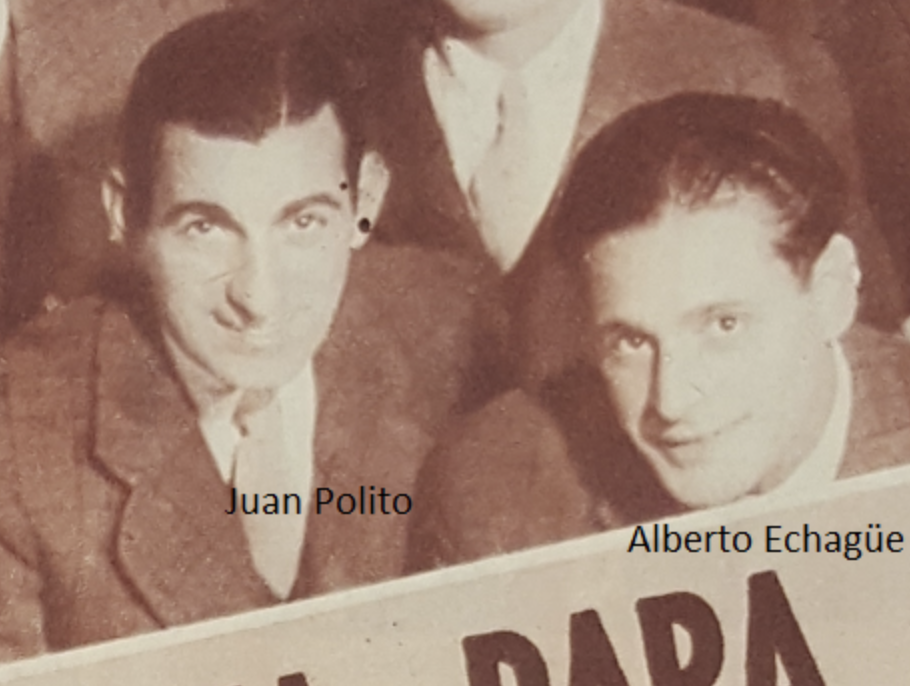
So, the first time I DJed, and with all the accompanying writing I mentioned earlier this week: my favorite tanda was Polito. I wasn't referring to the sung tanda with Echagüe, but the instrumental tanda by D'Arienzo from 1939, where for me, the pianist Juan Polito was front and center.
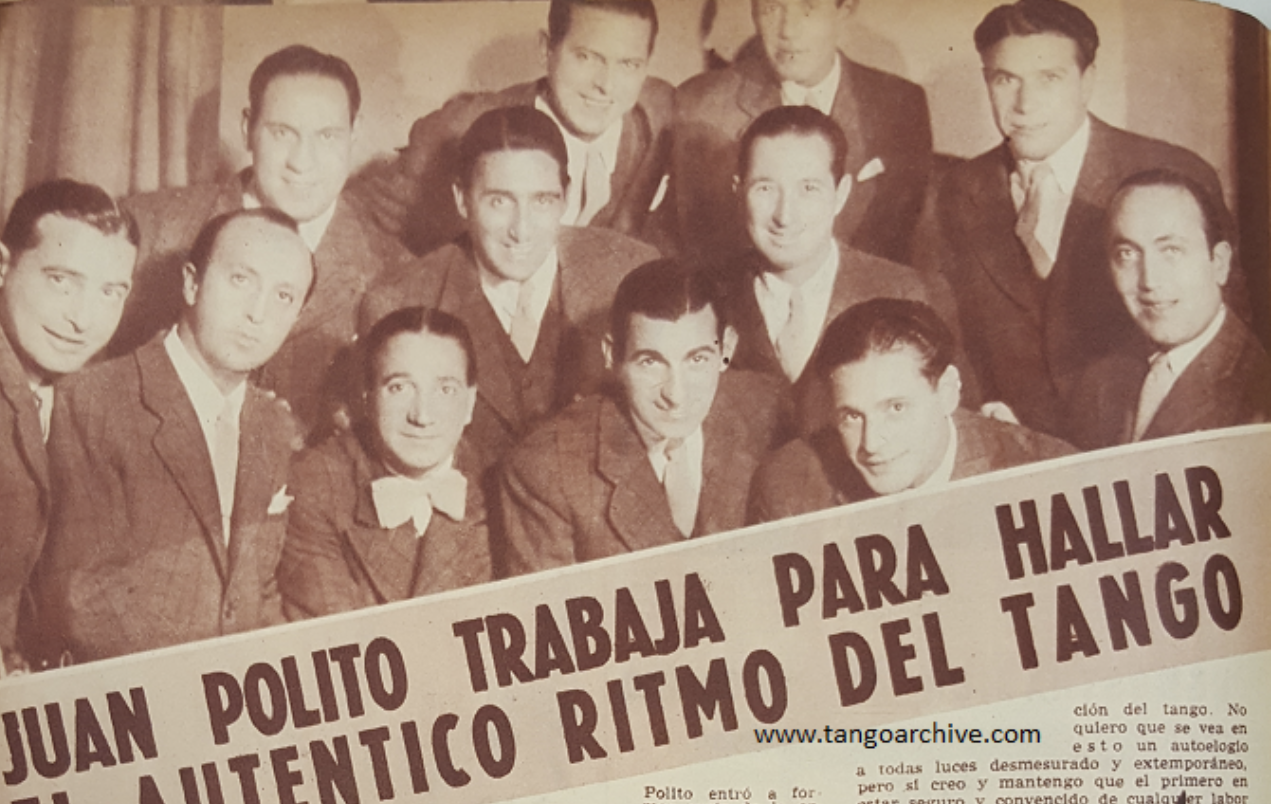
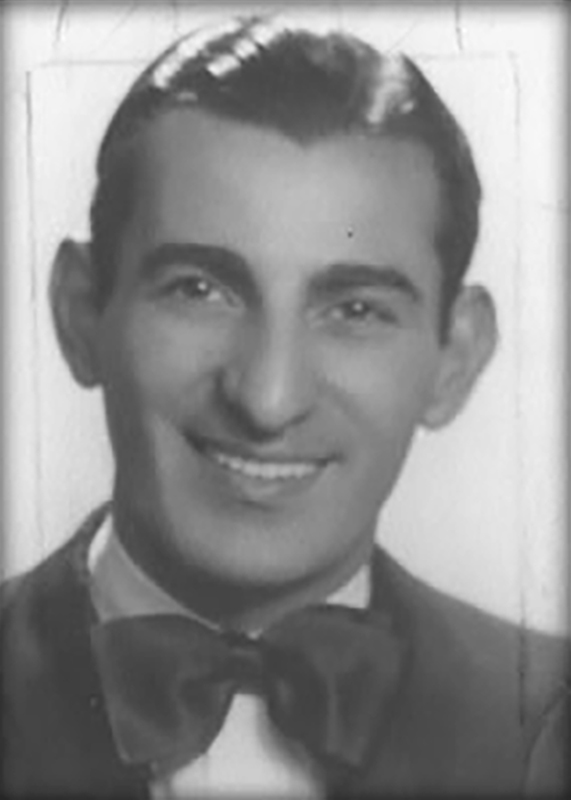
The entire tanda list was pretty heavily on the rhythmic side. Towards the end, there was some "love" too, but essentially it was all pure punch, pure "energy." Love and energy are, simply put, the two components of well-organized tandas. They should alternate and keep a balance. But I was really more on the aggressive side… I hope the softer faction among dancers could tolerate so much "energy." But the power came in its most beautiful form, sung by Castillo or Fiorentino, among others. Yet, the peak of authentic, charged, punchy energy is D'Arienzo in his fastest phase, specifically 1939. And besides the unique *marcatos*, *síncopas*, and runs of the Bandoneón, the absolute peak of energy is this pianist: Juan Polito. And I only realized while DJing on Sunday how much this guy drives the music. Here's a portrait of him.
Born in 1908, he grew up with about 3 (or 4? no matter) brothers, all of whom played an instrument, but he gave up his music studies at 17 because his parents died. From the age of 16, he already played music with Juan Maglio Pacho (seriously, everyone is named Juan), and also led the Orquesta Típica Brunswick early on (one of the orchestras formed specifically by recording studios for pure recording). In 1930, at 22, he had already played with D'Arienzo for half a year (who at that time still played violin in his own orchestra). The two then parted ways again.
A little context: From 1935-1939, a kind of Tango revolution takes place, led by D'Arienzo (who, by the way, is another Juan, how could it be otherwise). He brings a hammering, clear beat into play, and it gets faster every year. Every orchestra copies him (even his arch-rival Di Sarli, just listen to Catamarca or Corazón, for example). In July 1935, he starts these recordings, but it doesn't really kick off until December 1935, because that's when Rodolfo Biagi comes to the piano. The two really go wild, and Biagi already has his constant upbeat entrances and syncopations in his head and on the keys with D'Arienzo. He centrally shapes this revolution. Yes, and that's probably why I hadn't really noticed Juan Polito. Around June 1938, the tensions between D'Arienzo and Biagi get so bad that they clash. D'Arienzo finds the applause for Biagi too much, and throws him out of the orchestra (Biagi quickly forms his own band, which, as is well known, becomes highly successful).
D'Arienzo now needs a pianist, and his partner from 1930, Juan Polito, is just right. From July 1938, they are already recording together. For D'Arienzo, the recording year is actually divided into two halves: 14 recordings with the trickster Biagi, and 14 with the powerhouse Polito (these numbers are from Michael Lavocah - link to him is under resources). The first recording is El internado, and when you listen to it in context, you have to wonder if the clear off-beats, for example in the violins (i.e., in D'Arienzo's own instrument), aren't a message to Biagi and the world, a seizing of this rhythmic component. Biagi's trademark is precisely this emphasis on 2 and 4, i.e., on the upbeats in the measure, and surprising the listener with unexpected accents. Compare "more normal" ways of playing El internado (e.g., with Canaro) with D'Arienzo's 1938 version in this compilation (just to show that these upbeats, these offbeats, are not in the composition but in D'Arienzo's arrangement): https://open.spotify.com/playlist/5bLfBoQEgQVnP0J5XVuZMf?si=c5aede7a2719417f
Now, some of the most important recordings with Echagüe also emerge, such as La Bruja, Mandria, No Mientas, and Trago Amargo. La Bruja, one of the most popular Tango titles ever, was actually composed by Polito! Mandria and No Mientas are the core of what could hyperbolically be called Tango-Metal. My listening focus for these pieces has always been on Echagüe and the orchestra as a whole. For Mandria, I once wrote down all the "bridges" and the structure of the piece, and the piano is also very influential here - but only now have I connected this piano with those instrumental powerhouses that formed Sunday's tanda:
No me lo digas
Charamusca
El marne
Por que razón
Here are the songs from the tanda on Spotify: https://open.spotify.com/playlist/3C0Rr4ps43lwZB8YLajADy?si=e34f311b6d1c429b
The tanda itself could be put together better, but listen to these titles and tell me you don't also want to scream "Politoo!" It's impossible not to, right?
When looking at descriptions from passionate music lovers, Polito is described as "un prodigio de ritmo y fuerza bailable," a marvel of rhythm and danceable power, and as a "cadenero," meaning his music drives you. Cadenero also describes someone who organizes the orchestra through their force and power. He pulls the chain (*cadena*) and the others follow. Good orchestras need this in a Bandoneon player - but also at the piano. So yes, for me, Mr. Polito is the most cadenero of all pianists.
I'm venturing out on a limb here a bit, because it's all about the music. Can you correct anything I'm claiming here? Please write it in the comments! So, about the music:
Musically, Ignacio Varchausky describes Polito's, Biagi's, and Salamanca's playing collectively as percussive and insistent. Perhaps that's why I, as a drummer, like it so much. But Biagi never comes close to Polito in terms of this percussiveness. Biagi's bridges, by which I mean his endings or interjections to musical phrases, sometimes include small glissandi, and typically limit themselves mostly to single accents on "2" and "3" (staccato quarter notes), on "and 2," or on "and 3" (staccato eighth notes), often with a playful character. If that's not clear enough now, you'll have to ask me in person :-D. Polito partly copies Biagi, has a clearer attack (and that's saying something compared to Biagi), plays triplet runs instead of glissandi, with individually clearly struck keys, and thus conveys a completely different urgency: He places himself at the center of the message, and doesn't decorate around the edges. This naturally pushes the entire orchestra to a different level of intensity. I don't think that's so hard to hear. Let the two duel, for example, by listening to El triunfo, and then Charamusca. I deliberately chose Charamusca as the "tamer" one from the Polito-Tanda. Nevertheless, Polito wipes the floor with Biagi. Or a bit more power from Biagi? You could take the Tango El cisne. Slightly longer runs here, and also driving chords as part of Biagi's bridges. Here, Biagi's playful "joker" character also emerges. It seems to me that Biagi is also quieter than Polito (with the exception of Champagne tango, Biagi's last recording with D'Arienzo) - I wonder if Polito's piano was moved closer to the microphone from June 1938. Something Polito does much more (or was the first to do?) are these solos where he doubles or strikes the same note an octave apart. Perhaps that creates this volume effect? Well, one would have to ask wiser people about that.
The two also differ in marcato; I would say that here too, more pressure comes from Polito.
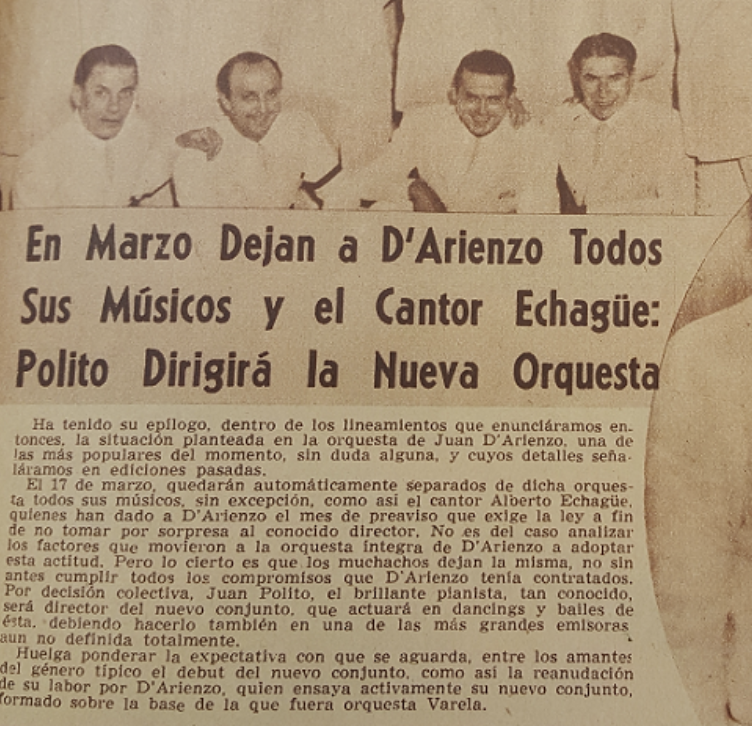
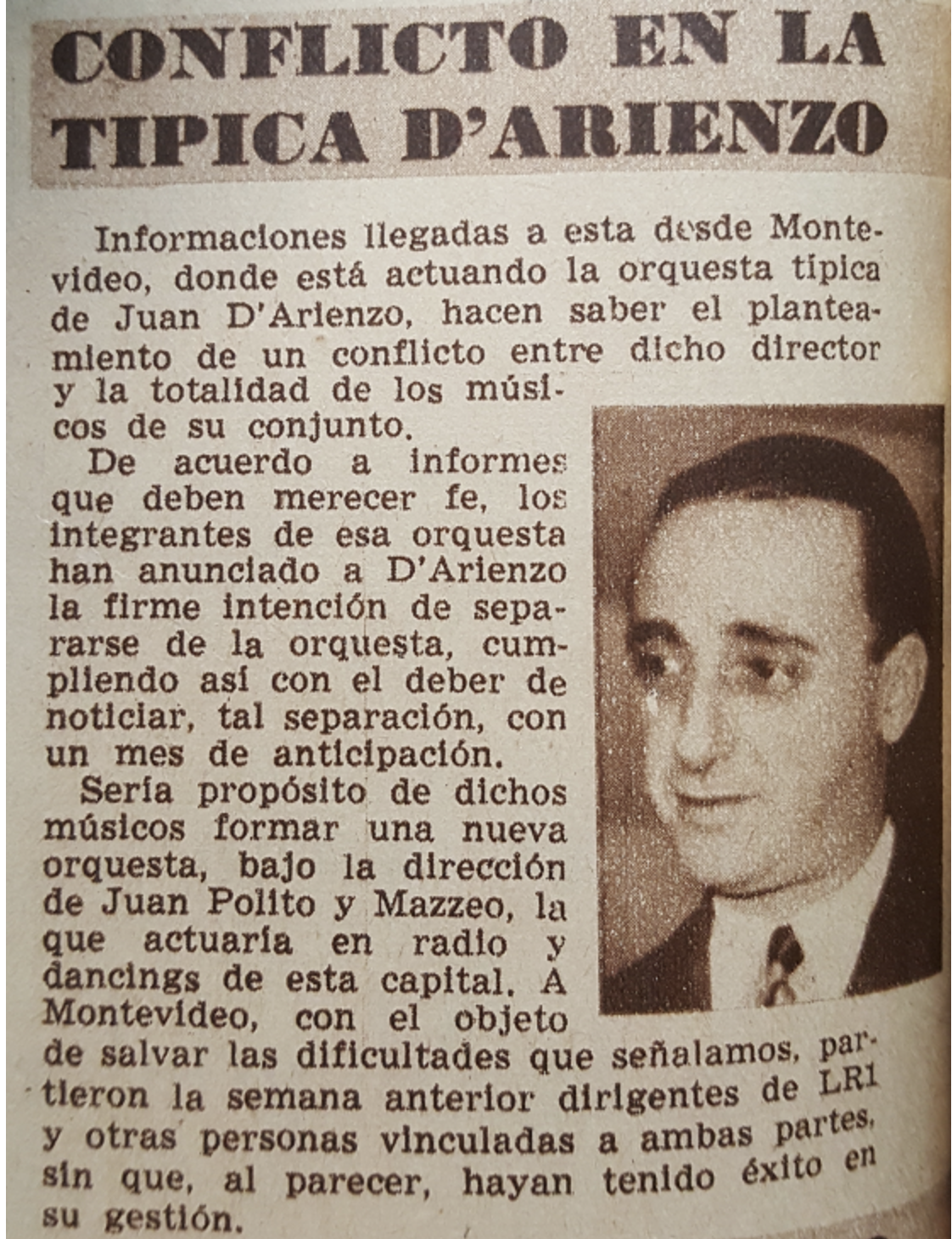
Then history has such an irony. What happened to Biagi in '38, Polito does to his own boss in '40: he leaves, taking practically the entire orchestra with him down to the last man, even Echagüe. Only this time, it doesn't catch fire. His own band doesn't get a proper record deal (they work on the radio instead), which is why we sadly have no recordings of him from that period. D'Arienzo, on the other hand, simply builds a new orchestra with Salamanca on piano and carries on. (Salamanca's first name is Fulvio, by the way, so he's not a Juan).
And then, in 1957, the circle closes: Salamanca leaves to form his own band, and Polito returns to the piano with D'Arienzo. His comeback piece is called Llegando a puerto, arriving at port.
Would you like to see some danced examples of these pieces?
Here's Jonathan and Clarisa to por qué razón (Polito has another solo from 2:40): https://www.youtube.com/watch?v=20CRJfbCNkk
The same song by Pebete and Cecilia (can anyone else so clearly trace the instruments and phrases onto the dance floor?)
https://www.youtube.com/watch?v=L5P39TBlnQU
Relatively complete biography: https://www.todotango.com/english/artists/biography/942/Juan-Polito/
A bit more here: https://tangoarchive.com/2017/06/07/an-interview-with-juan-polito/
Kommentare
Lädt…